Blog
What Does a Full Boiler Strip-Down Clean Involve?
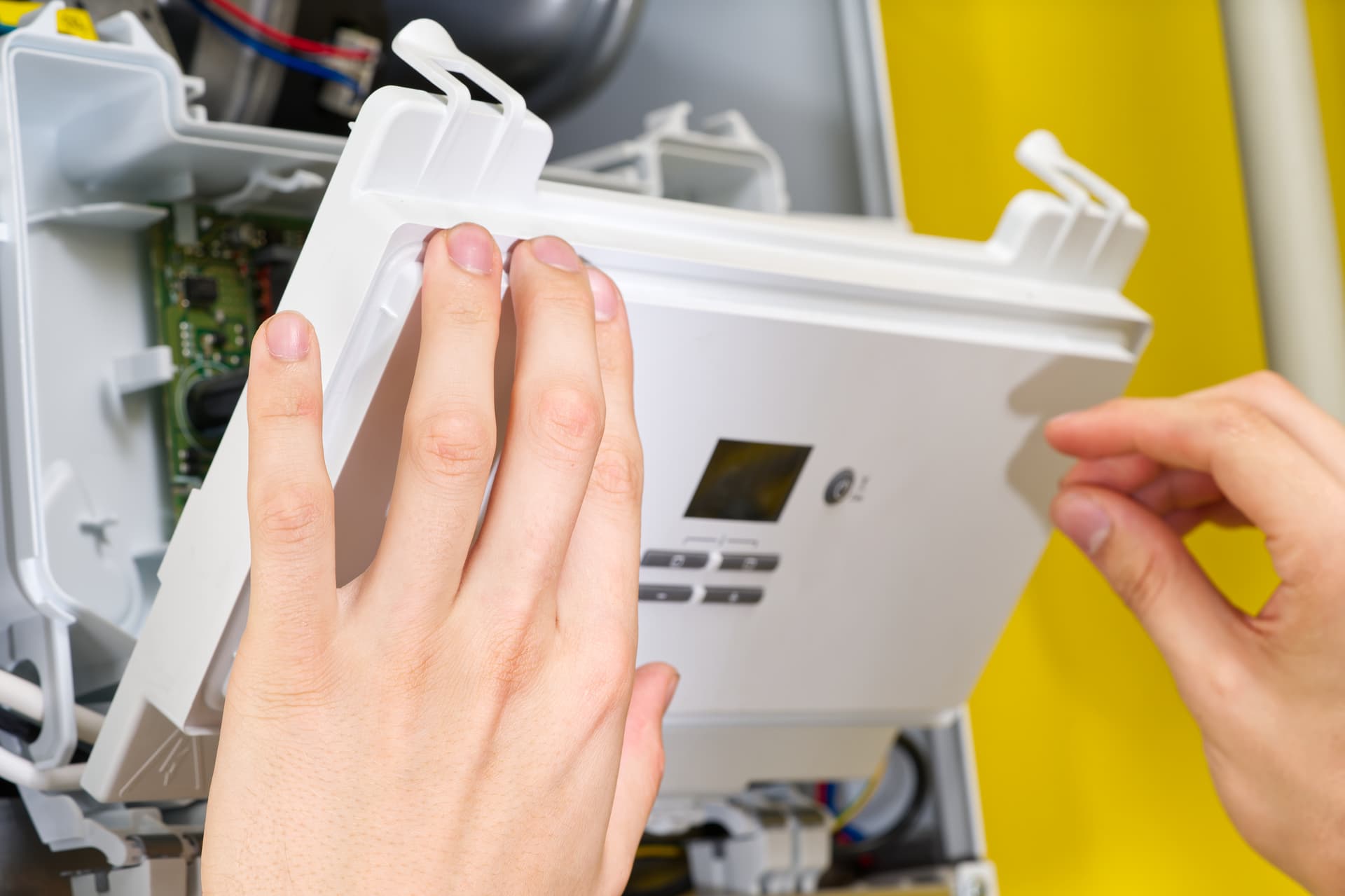
A full strip-down clean is not simply a matter of wiping dust from the outside of your boiler. It deals with parts inside the appliance where deposits can interfere with combustion, heat transfer or the movement of condensate. Understanding how those problems develop helps explain why cleaning matters, and why it should be based on the condition and design of the boiler rather than treated as a one-size-fits-all task.
Why deposits can affect boiler operation
A boiler needs fuel and air to burn correctly, and it needs to transfer the heat produced into the water circulating around your home. The burner (where the fuel burns) and heat exchanger (where heat passes into the water) are central to that process. If deposits build up on relevant surfaces, they can interfere with how the burner operates or how effectively heat moves into the water.
The consequences are not always obvious at first. A boiler may continue to provide heating or hot water while its combustion or heat transfer is no longer working as intended. A problem can also develop in one part of the appliance without causing a clear fault elsewhere. That is why an external check or a quick look at the controls cannot tell you what is happening inside.
A clean is intended to remove contamination from the parts that need attention. It is not a substitute for checking how the boiler is operating. Cleaning alone cannot establish whether combustion is correct, whether a component is damaged or whether another fault is causing the symptoms. Those questions need assessment by a qualified engineer.
How condensate problems fit in
Condensing boilers produce condensate as part of their normal operation. That liquid needs to drain away through the appliance’s condensate route. If the trap or drainage path becomes obstructed by debris, condensate may not move through as it should. The result can be disrupted boiler operation or the boiler shutting itself down, depending on the appliance and the fault.
This is a different issue from deposits affecting the burner or heat exchanger, even though both may be considered during servicing. Treating every problem as a cleaning issue can miss the actual cause. An engineer needs to identify which part of the boiler is affected and whether it needs cleaning, adjustment, repair or further investigation.
Why a strip-down is not identical for every boiler
Boilers differ in design, and the parts that can be accessed and the correct way to inspect them depend on the appliance. The amount of attention needed also depends on its condition. A boiler that is operating normally and has clean internal components may not need the same cleaning work as one where an inspection finds deposits or restricted drainage.
That is why “full strip-down” should not be taken to mean that every internal part is removed on every service. The work needs to follow the appliance’s design and the findings on the day. Unnecessary dismantling is not the aim. Nor should visible cleanliness be used as the only measure: testing and inspection help establish whether the appliance is operating safely and correctly.
If you notice repeated lockouts, a change in how the boiler runs or unusual noises, mention the details when arranging a service. These signs do not prove that deposits are the cause, but they give the engineer useful context. Avoid opening the boiler or trying to clean internal gas components yourself. Gas appliance work should be left to a Gas Safe registered engineer.
What the cleaning can and cannot tell you
Cleaning can address deposits that are affecting components, but it does not automatically resolve every efficiency or reliability concern. If a part is worn, damaged or incorrectly operating, cleaning it will not restore it. Equally, a fault elsewhere in the heating system may affect performance even when the boiler itself is clean.
A useful service conversation should make clear what was found, what cleaning or other work was appropriate, and whether anything still needs attention. If further work is recommended, ask what the finding means for the boiler and what the proposed work is intended to address. This helps you distinguish routine cleaning from a repair or a separate investigation.
For homeowners in Shevington and across Wigan, we can discuss what to expect from our Boiler Servicing service and help you understand the findings from your appliance. The important point is that a strip-down clean should respond to the boiler’s condition, not be treated as a promise that every underlying fault will disappear.
Other Articles